
By Shilo Clark
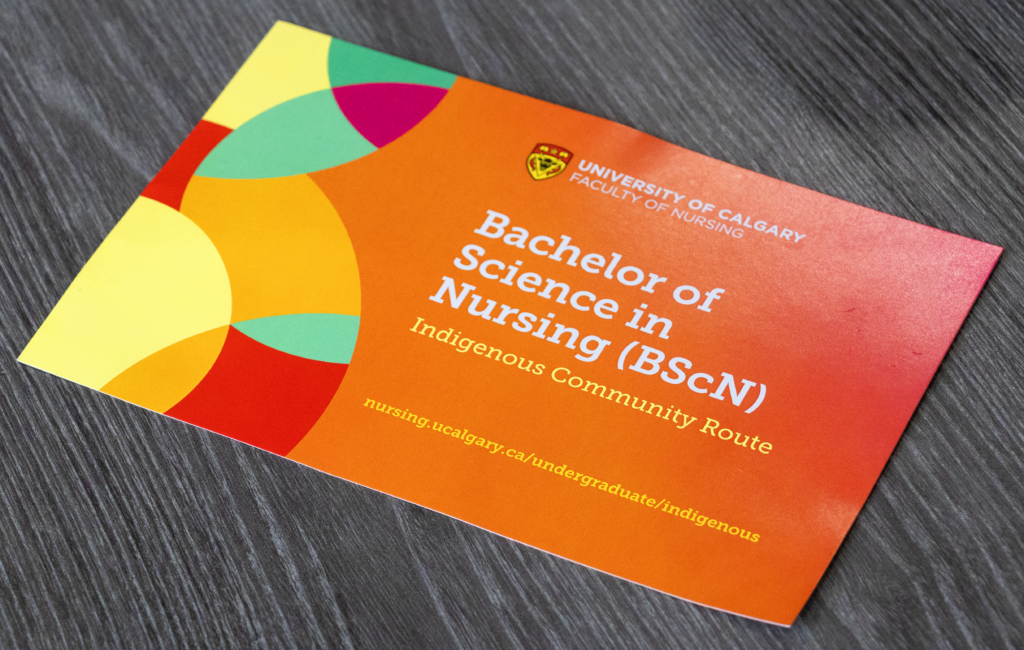
Old Sun Community College in partnership with the University of Calgary’s Faculty of Nursing is continuing to make significant strides in supporting Indigenous learners through the Bachelor of Science in Nursing, Indigenous Community Route, a program that is already changing lives and strengthening healthcare in Siksika Nation and beyond.
The initiative welcomed its first cohort in Fall 2022. According to Kim Halliday, Indigenous Student Liaison for the Faculty of Nursing, the program was designed to create space for Indigenous students to pursue nursing education close to home while receiving culturally grounded support.
“We see many applications every year,” Halliday explained. “Each cohort can only take eight or nine students because of licensing requirements, but if we ever reach a point where we have many fully prepared students, that would be a wonderful problem to have.”
One of those students is Lesley Black, a member of the second cohort that began in 2023. After completing her prerequisites at Old Sun Community College, she successfully entered the program, an achievement she describes as life-changing.
Lesley shared how the curriculum at Old Sun, including courses in Indigenous studies and history, helped her reconnect with her culture while preparing her academically. “I was very limited in my cultural knowledge,” she said. “Taking those courses, hearing from knowledge keepers and Elders, really opened my eyes. It even led me to research my own family history.”
As she moved into the program’s clinical and long-term care components, Lesley began to see firsthand the inequities faced by Indigenous patients. She noted how vital it is for Indigenous nurses to understand cultural traditions, community protocols, and the and the everyday factors that affect the health of Indigenous people.
Her lived experience, she said, directly informs how she plans to serve her community in the future. “When I bring a patient to the hospital as an EMS, and they see I’m Indigenous, there’s this sense of comfort and safety. Programmes like this help break down stereotypes and teach others in healthcare why cultural practices matter.”
Lesley also emphasized the essential academic and cultural support she received along the way. “There were times I cried, times I struggled, and times I celebrated,” she said with a laugh. “Kim was always there to help us find the resources we needed, but students also have to speak up. You have to put in the work, you have to sacrifice, but it’s worth it.”
Halliday agrees, noting that the heart of this program is creating trusted, humble, culturally informed nurses who can uplift Indigenous health. “This partnership is about supporting Indigenous nursing students so they can go out and serve the Nation,” she said. “It’s about shifting the narrative from Indigenous sickness to Indigenous health & wellness.
Both Halliday and Lesley hope the program inspires younger generations, showing them that not only is nursing possible, but opportunities extend far beyond graduation. Lesley already has her sights set on eventually becoming a Nurse Practitioner. “Nursing doesn’t stop here,” she said. “There’s always room to grow.”
The Indigenous Community Route continues to stand as a powerful example of what can be achieved when universities and Nations work together, creating space for excellence, cultural pride, and a stronger future for Indigenous healthcare.