
By: Lexxington Many Heads
Kenzie Littlelight is a Tsuut’ina and Siksika artist, bringing a dynamic blend of cultural
grounding and contemporary expression to her work. Kenzie grew up in N.E. Calgary and on
her grandparents’ farm, Levi and Gail Many Heads. She is now based in Toronto where she
is currently completing her Bachelor of Fine Arts (BFA) in Sculpture and Installation at the
Ontario College of Art and Design University (OCAD). In addition to her studies, she works
remotely as an art curator for a new Indigenous supportive housing project led by the
Vancouver Aboriginal Friendship Centre Society, a role she has held for the past three
years. Although she mostly does interdisciplinary work, she has recently tapped into
creating sculptures and digital pieces that draws on her culture and upbringing. Because
she grew up in the city, she explains, “I really like representing contemporary and urban
indigenous experiences but at the same time fusing traditional knowledge with elements of
pop culture references which ends up creating a visual dialogue between traditional and
contemporary indigeneity.”
Initially, Kenzie did not start off with art. She had always been creative and hands on
through fashion, music, drawing, and anything that allowed her to express herself, but she
didn’t grow up with a visual artist in her family. “I didn’t really know what being an artist
looked like, especially what being an indigenous artist would look like,” Littlelight says.
Kenzie went on to explain that she ended up neglecting that part of her for some time and
pursued a different academic route, studying political science at the University of British
Columbia. However, she eventually reached a turning point, “I came to the realization that
you can’t hide from what makes you happy and what your passions are, so I decided that I
was going to pursue me, at the end of the day.” That decision led her to move from
Vancouver to Toronto, where she is now completing her BFA at OCAD. Before entering the
Sculpture and Installation program, she studied at OCAD’s Indigenous Visual Culture
program, one of the only programs of its kind in the country. Her choice to specialize in
sculpture and installation came from wanting to explore new materials and forms of
creating, such as metal—something she’s never worked with before. Kenzie describes her
creative process as deeply instinctive “I like to just really trust my gut, and I think that
decision to switch career paths came from that place… and trusting yourself is part of that
process.”
As an emerging artist, Kenzie is still exploring what she wants to put out into the world and
what she wants to say. Anything that she is personally drawn to, as simple as colours,
shapes, textures, and sounds, she likes to incorporate into her work alongside themes of
blending traditional knowledge of her culture and language with contemporary indigenous
experiences, and who she is as an urban Indigenous woman artist. She explains that “It
usually manifests into something very meaningful without that purpose intentionally.”
Another theme that she has showed interest in and has incorporated into her work are
concepts of the indigenous futurism movement, an art movement that blends traditional
knowledge and culture with technology and ideas of the future. “I really like this theme
because it reframes indigenous people as creators of the future instead of relics of the
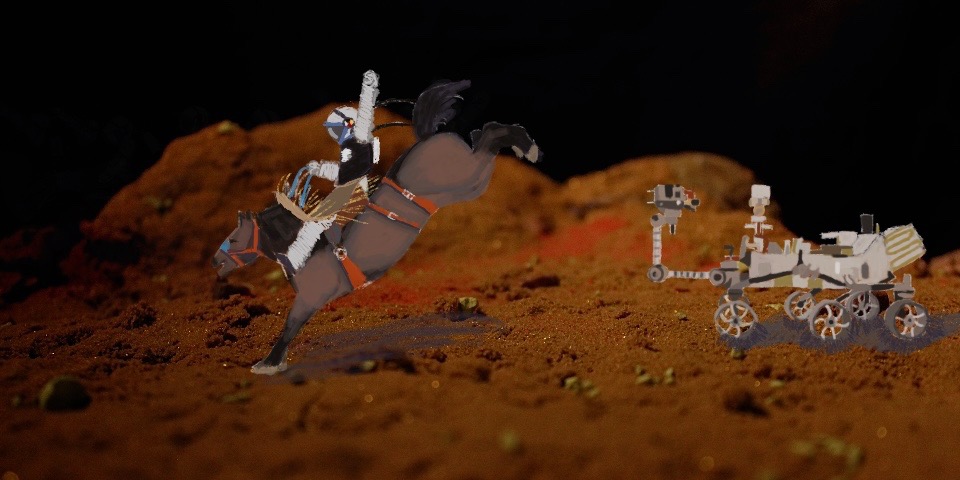
past,” Littlelight expresses. One of her pieces, a GIF titled NDN on MARS, exemplifies this
approach. The animated piece features the traditional Blackfoot trickster Napi saddle
bronc riding into a Martian sunset. “This imagery reimagines the colonization of mars being
done but in reverse and just the stories that would arise from that situation,” she explains.
The piece integrates the presence of past, present, and future Indigeneity while allowing
her ancestors and descendants to interact through one piece of work.
Recently, Kenzie had undertaken an opportunity that was advertised at her school. She
showcased her art in Excellence in Indigenous Art: A Juried Exhibition, which ran from
December 1 to January 11. Chosen alongside eight other Indigenous students and recent
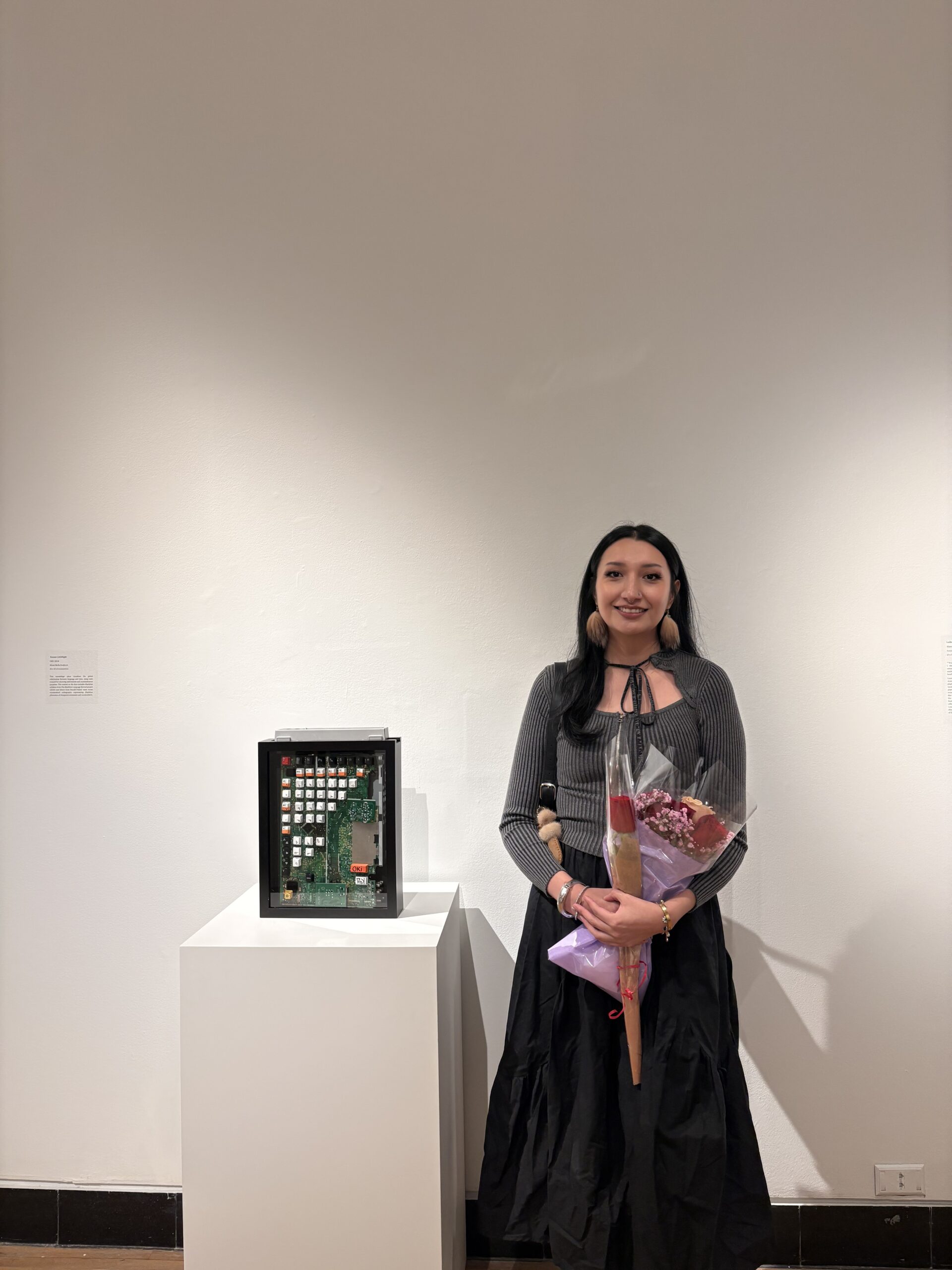
OCAD alumni, she submitted two pieces for the show. The first, Oki, was an assemblage
sculpture created from a deconstructed circuit board and computer keyboard keys,
visualizing the global relationship between language and time using tools for receiving
information and communication purposes. Developed in a class called Indigenous
Sculpture Strategies, the work reimagined found objects through transformation and
reassembly. The keys feature Blackfoot syllabics from the Blackfoot Language Revival
Project and letters from Donald Frantz’s most recent standardized orthography. Kenzie
describes the piece as a representation of themes of indigenous futurisms and making kin
with machines. “We receive what we put into computers and one day I hope my children
will be able to be fluent in their languages with the help of technology.” she says.
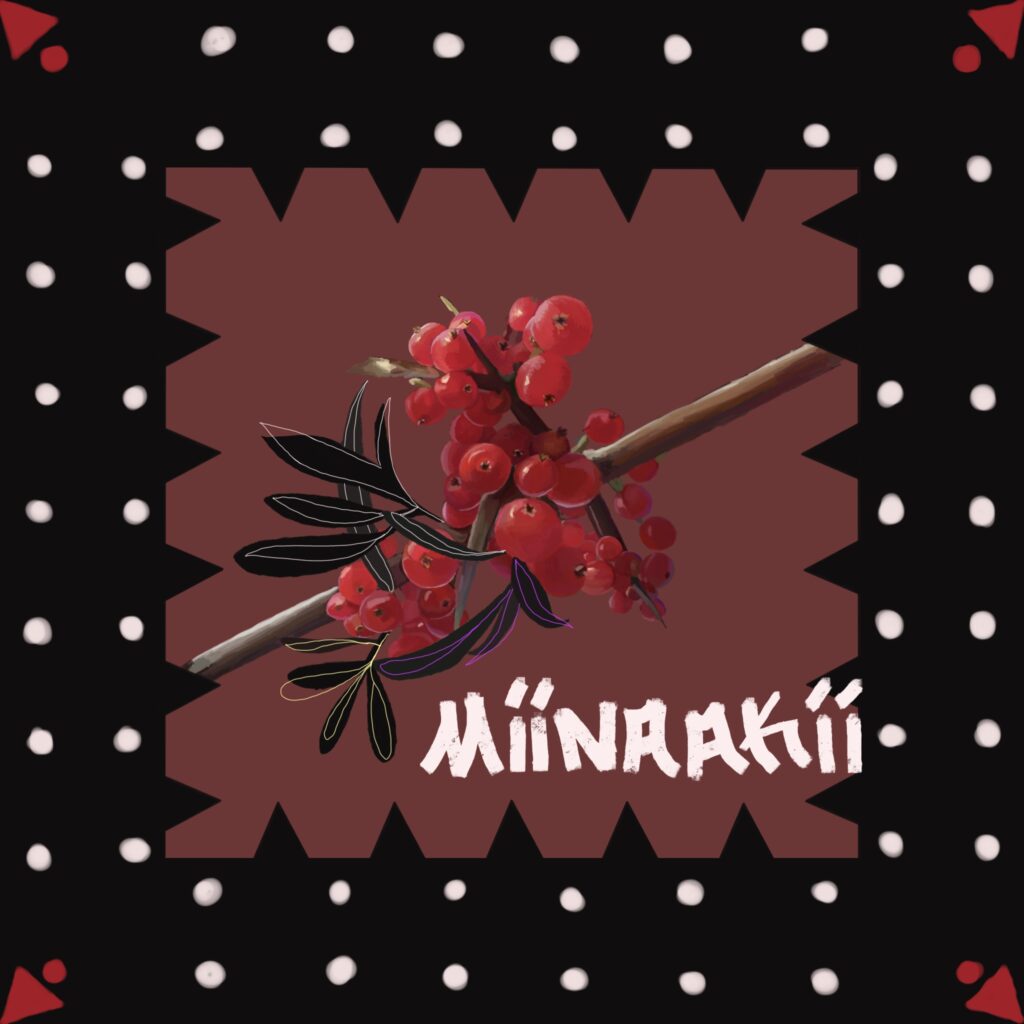
Her second piece, Miinaakii, was a digital piece created in Procreate then sent out to be
printed on canvas. It features bull berries, or buffalo berries, that’s featured in a traditional
Napi story that she grew up hearing from her grandpa. “Miinaakii means berry girl and it’s
kind of an unofficial name and character that I like to incorporate into my work,” Kenzie
shares. Miinaakii represents Littlelight’s youth and the phase of life she is in now, exploring
who she is, as both an artist and an Indigenous person. She continues, “berries, as a
concept, can be sweet, tart, or bitter but they keep growing and come back every season.
That’s why I wanted to feature berries in this piece; it’s a little bit of an introduction to my
work and who I am as an artist right now.”
One of Kenzie’s goals is to eventually go home with the knowledge she’s learned and the
places she’s travelled to, to create a space where Indigenous kids can feel safe enough to
express who they are without external forces interrupting that flow. She added that part of
this work is “uplifting our youth to not be afraid of their feelings and have them connect with
their surroundings and even to use their senses, part of that also calms the nervous
system.”
For Indigenous people, especially youth wanting to pursue art, Kenzie shares some words
of encouragement: “For young, Indigenous artists, it’s so important to make space for your
passions and creative endeavours. Anxiety is so common among indigenous people, so
when we hone down and focus on ourselves, what we need in that moment, that
authenticity to make great art can shine through when we’re given those spaces, tools, and
resources to really come back to ourselves.”
To see and learn more about Kenzie Littlelight’s artwork and future art displays, follow her
Instagram art account @miin_aakii_art.